 author
The real issue goes beyond where the screen sits. Does the location provide proper space? It also needs clear visibility and solid protection. These elements prevent the unit from becoming a daily headache.
In wide open areas, outdoor freestanding digital signage easily beats wall mounted displays. It requires no supporting structure. A wall might be completely missing. It could lack structural strength. Sometimes, it is just positioned poorly.
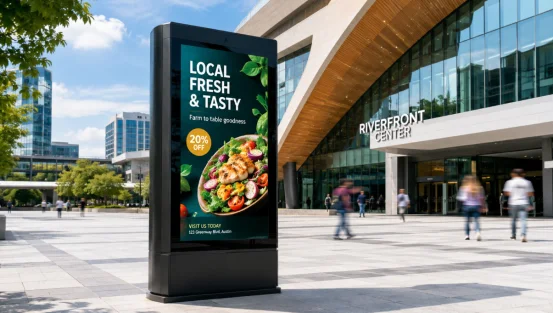
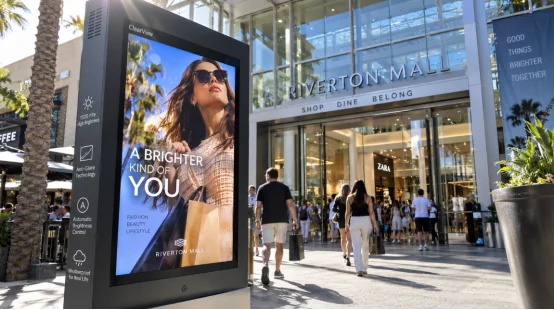
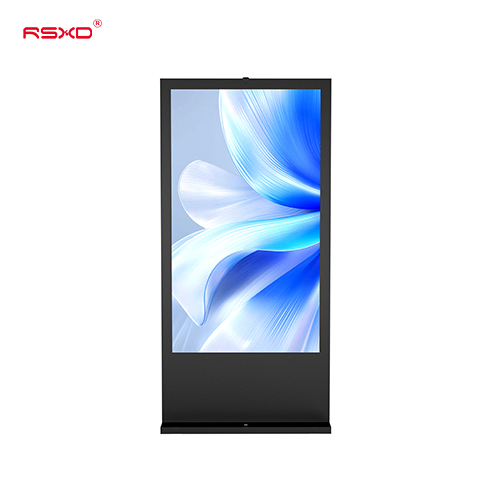
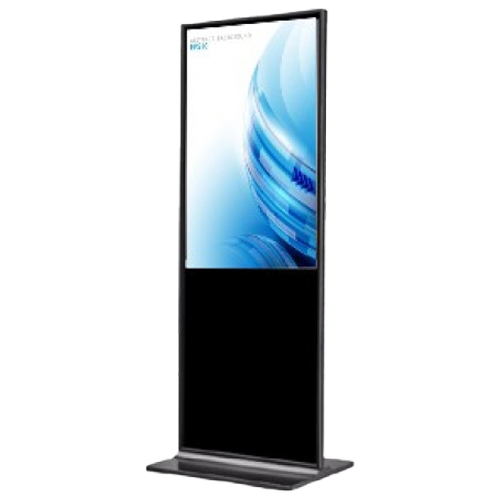
Sometimes your display must stand independently. It must remain readable under bright sunlight. It should engage moving pedestrians rather than stationary crowds. Here, outdoor freestanding digital signage makes total sense. Try placing it at a plaza entrance or a parking lot edge.
It also works great near a station forecourt, community gate, or retail walkway. In these specific spots, the screen must grab attention instantly. People rarely stand around waiting for it.
Freestanding units work well when the message has to face people head-on. That matters at places where traffic keeps moving and angles change all day. You can put the display where people naturally pass, not where a wall happens to be available. That small difference changes how often the screen is actually seen.
Do you need to share notices, promotions, schedules, or wayfinding updates? A freestanding setup feels much easier to manage. It handles rapidly changing media perfectly.
People spot this information instantly. This offers a huge perk for 24/7 outdoor advertising. The screen performs flawlessly. It easily survives busy, dusty, or messy conditions. Outdoor spaces normally act exactly like that anyway.
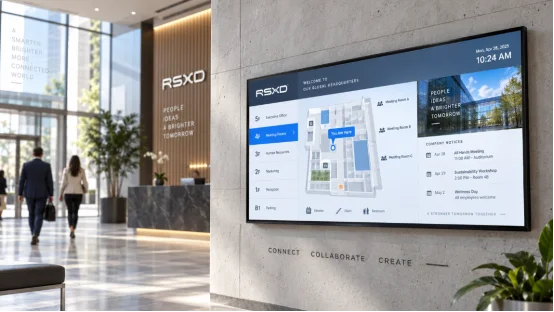
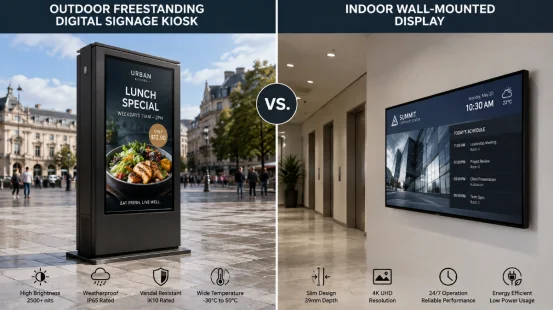
Wall mounted displays remain a clever choice. This applies if your location centers around an existing wall. The viewing zone must be completely fixed. Indoor corridors, lobbies, service halls, and narrow public areas normally fit this pattern. Here, the wall handles the structural heavy lifting. The screen sits securely out of the way. Therefore, the layout feels remarkably clean.
Wall mounted displays offer a visibly neater solution when floor space runs short. You skip worrying about a heavy base or a bulky freestanding frame. Furthermore, crowds won’t trip around the hardware. This logic works beautifully in busy reception zones or narrow hallways. Every single square meter there holds maximum value.
A wall mounted display works best when people look from roughly the same distance every day. That happens in waiting areas, fixed service points, and indoor information spots. Once the viewing angle and distance are stable, the wall mount is simpler and usually easier to justify.
This is where the decision usually gets real. Sunlight, rain, heat, dust, and even a bit of wind can make one setup feel natural and the other feel forced. Outdoor digital signage has to survive the environment first, then look good second. That order matters more than most people expect.
High brightness is not a nice extra outdoors. It is basic. If the screen sits in direct sun, weak brightness disappears fast. The same goes for weather protection. IP65 protection, smart light sensing, intelligent temperature control, and an anti-corrosion housing are the kind of details that keep a display usable in public spaces, especially in open squares, transport nodes, or coastal areas where conditions change all day.
A wall can look convenient until the structure, wiring, and service access start asking questions. If the wall is too weak, too far from the best viewing point, or hard to maintain, a freestanding unit is often the cleaner answer. You also want room for cooling and inspection. If a technician has to fight the site every time, the whole setup becomes expensive in a very quiet way.
A display is not just a screen. It is a thing someone has to update, check, and keep alive. If you know the content will change often, the operation side starts to matter as much as the placement side. That is where some projects win or lose their patience.
Remote content publishing is a big deal when one site or many sites need the same message at once. You do not want to send someone out just to swap a promotion or fix a notice. That is the kind of work that sounds small until it happens three times in a week. Freestanding outdoor units with remote management make that less painful.
When a display is easy to reach, easy to inspect, and built for long outdoor runs, you spend less time on maintenance. That is not glamorous, but it is the part the client remembers six months later. A setup that cuts site visits, handles routine checks more cleanly, and keeps running without drama is usually the one people keep.
When a screen has to work outdoors for real, the supplier matters almost as much as the hardware. RSXD official site shows in-house R&D, production, testing, aging checks, and after-sales support, which is the sort of background that helps when a project has more going on than a simple showroom install.
Its outdoor freestanding line covers multiple sizes, 1,500 to 3,000 cd/m² brightness, IP55/IP65 protection, smart light sensing, intelligent temperature control, remote content publishing, and anti-corrosion housing. That mix is useful because outdoor projects rarely fail on one big issue. They usually fail on small ones that keep adding up.
Q1: When should you choose outdoor freestanding digital signage?
A: When screens must stand alone outside. They stay readable in sunlight and face steady foot traffic.
Q2: When are wall mounted displays the better choice?
A: Use them if you possess a sturdy wall. Viewing distance is fixed. The site is mostly indoor.
Q3: Why does high brightness matter so much outdoors?
A: Daylight washes out weak panels quickly, especially in open plazas.
Q4: What spec matters most in bad weather?
A: You need IP65 protection and tight sealing. Cabinets must endure heat, dust, and moisture.
Q5: Why does RSXD fit this kind of project?
A: Its outdoor freestanding line provides various sizes and high brightness. It features weather protection, smart light sensing, and remote content publishing.