 author
A screen looks great indoors. But outside at noon, it quickly fades. Outdoor digital displays stay readable because the entire setup handles sun, heat, and weather. They run all day long. It is not just about a huge brightness score.
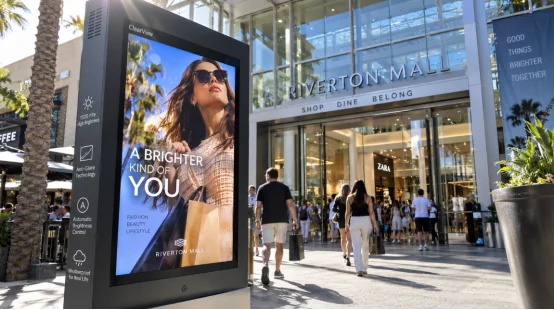
A true outdoor digital display mixes a high-output backlight with low-reflection glass. It also features automatic brightness control, cooling, and a sealed cabinet. Together, these parts help a sunlight readable display share menus, directions, and ads clearly.
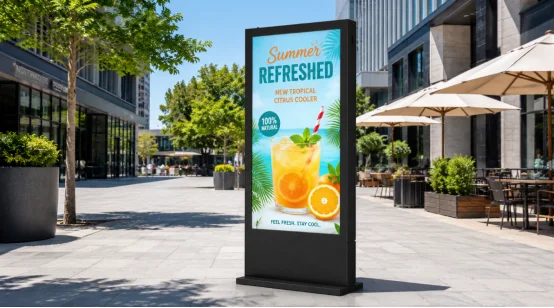
Direct sunlight raises the light around the screen and reflects from its front surface. Dark areas look gray, colors lose depth, and small text becomes tiring to read.
A high brightness outdoor display needs enough output for the actual installation. Product specifications place typical indoor LCD units around 300 to 500 cd/m² and outdoor models around 800 to 1,500 cd/m², with higher brightness available for custom work.
Outdoor display brightness is not a universal pass or fail number. A shaded station entrance and a west-facing plaza have different needs. When comparing outdoor display brightness nits, ask for complete-unit brightness after the cover glass is fitted. A high brightness LCD display can lose useful light through poor glass or a deep air gap.
An anti-glare outdoor screen spreads harsh reflections, while an anti-reflective coating lowers surface reflection. An optical bonding display removes the air gap between the LCD and protective glass, cutting internal reflections and improving perceived contrast.
A sunlight readable outdoor display cannot be judged from panel brightness alone. The front structure often decides whether black text still looks black at lunchtime.
Full sunlight heats the glass, cabinet, power supply, and backlight. If heat has nowhere to go, the screen may reduce brightness for protection. Good outdoor display thermal management keeps the picture stable through the afternoon.
Visibility changes throughout the day. A screen that works at 1 p.m. may be far too bright at 9 p.m., so it should react to the site instead of running at one fixed level.
Automatic brightness control uses an ambient light sensor to raise output in daylight and lower it after sunset. This reduces night glare, wasted power, and unnecessary backlight stress.
Sensor position matters. A canopy shadow or nearby lamp can fool it, so test the brightness curve at the real site.
Listed outdoor models show contrast ratios from 1500:1 to 4000:1 and a 178° viewing angle. Content design still carries real weight. Use bold type, short lines, strong contrast, and large icons on an outdoor digital signage screen. Pale gray text over a photo may look elegant indoors. Outside, usually not.
For an outdoor information display, directions should be readable in a quick glance. People at a station are often walking, holding bags, or checking a phone.
An outdoor display cooling system may use managed airflow, fans, or heat exchangers. The setup depends on screen size, solar load, and climate.
IP65 digital signage adds dust protection and resistance to water jets. A weatherproof outdoor display may also need UV resistance, corrosion protection, and condensation control. Available outdoor configurations list operation from -20°C to 60°C, IP65 protection, and continuous use, useful for 24/7 outdoor digital signage in plazas, parking areas, and transport hubs.
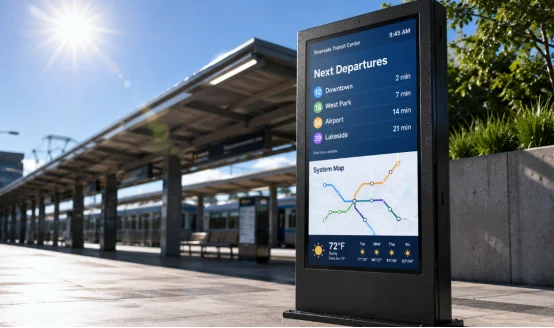
Both technologies work outside, but they solve different jobs. Choose by viewing distance, content detail, screen size, and service access.
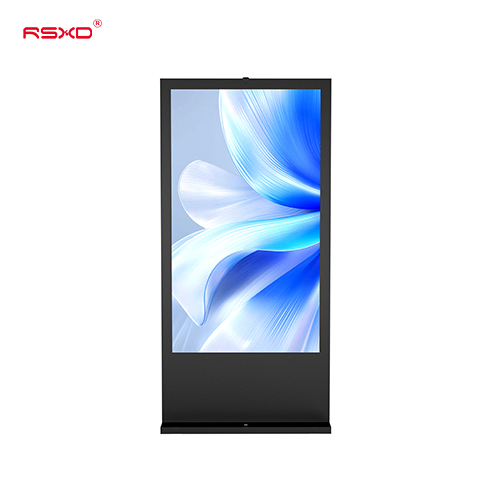
Outdoor LCD digital signage suits close viewing, detailed text, menus, maps, and touch interaction. It is often the practical outdoor display for direct sunlight when pedestrians stand nearby and need precise information.
An outdoor LED display suits very large images and long viewing distances. It is common on façades, stages, and large public spaces. The best display for direct sunlight is not always the unit with the highest nit rating. A close-view map and a giant video across a road have different requirements.
A spec sheet cannot show every site problem. Ask how the complete unit was tested and whether the supplier has handled a similar climate and viewing distance.
Factory procedures call for at least 48 hours of high-temperature aging for finished units. Checks cover brightness, contrast, color consistency, touch accuracy, and power stability. Outdoor high-brightness models also receive added temperature, waterproof, dustproof, and shock-resistance tests.
For a sunlight readable digital signage project, request assembled-cabinet results, not only panel data. Test a sample outside when possible. Five minutes can reveal glare, weak black levels, or noisy cooling.
A storefront outdoor advertising display may face reflected light from nearby glass. A parking kiosk may sit in partial shade. A coastal site adds salt and humidity.
Check screen direction, peak sun hours, viewing distance, mounting height, and access for filter cleaning. An optional sunshade can reduce solar heat. Simple, but useful.
A strong outdoor digital signage solution should support remote publishing, scheduled playback, fault checks, and practical service access. Sealing rings and dust filters are wear items. Maintenance guidance suggests replacing outdoor sealing rings every two to three years and cleaning or replacing dust filters every six to twelve months.
Outdoor projects often fail where the panel, cabinet, cooling, software, and installation meet. A capable outdoor digital display manufacturer should discuss them as one system.
RSXD focuses on commercial LCD display equipment and integrated display projects. Its work covers product R&D, structural design, sheet-metal processing, electronic assembly, software setup, testing, aging, customization, and after-sales support. That production chain is useful when a standard cabinet does not fit your site.
For outdoor projects, RSXD can adjust screen size, brightness, protection level, cabinet material, UV resistance, temperature range, interfaces, remote management, and installation form. Its project model also combines hardware, software, installation, commissioning, and maintenance. You can discuss sun direction, climate, content, and service routines before the cabinet is finalized. That is more useful than choosing from a short catalog and sorting out heat or glare later.
Q1: How many nits does an outdoor digital display need?
A: Most outdoor LCD jobs take 800 to 1,500 nits. But direct sun, glass, angles, and glare push that need higher. Always test the complete-unit results onsite.
Q2: Is 1,000 nits enough for direct sunlight?
A: It works well in light shade or mild sun. But harsh, all-day sunlight demands stronger light. You also need good reflection control and steady cooling.
Q3: Does optical bonding improve outdoor visibility?
A: Yes. It drops inside glare between the LCD and cover glass. This keeps contrast deep and text very clear.
Q4: Is IP65 enough for every outdoor location?
A: No. IP65 stops dust and spraying water. Still, you might also need shields against UV rays, rust, fog, extreme cold, or heat.
Q5: What should you test before placing an order?
A: Check full-unit brightness and glare. Also test hot-weather use, automatic dimming, and waterproofing. Finally, review cooling noise, content readability, and maintenance access.