 author
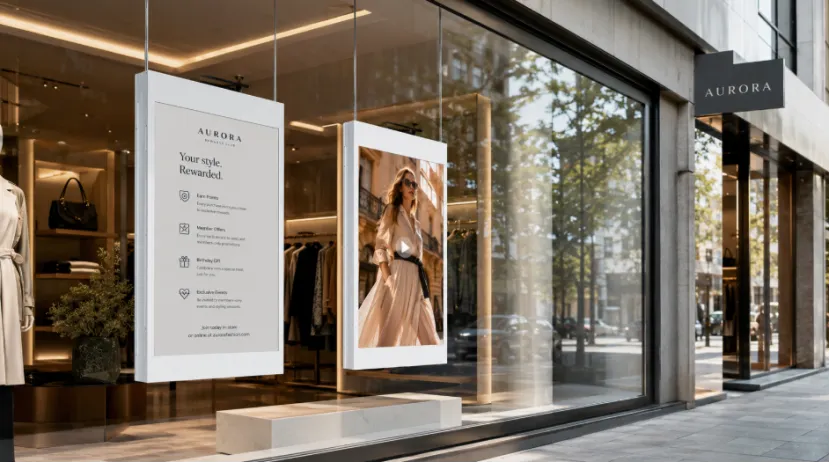
For many retail stores, the shop window is the first salesperson. It works before a customer speaks to staff, scans a QR code, or touches a product. The question is simple: should you still use a traditional poster, or move to a double-sided hanging window display?
Both can work, but they serve different retail needs. A poster is low-cost and quick for one simple message. A double-sided digital window display is stronger when you need motion, light, fast updates, and better customer attraction at shop windows.
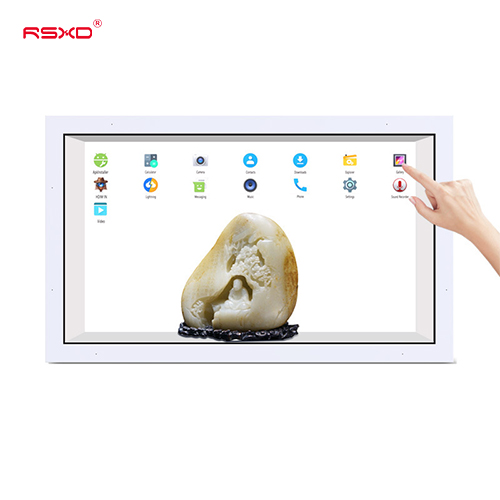
A double-sided hanging window display is a suspended digital screen used near shop windows, store entrances, and commercial storefronts. Unlike a single poster, it can face two directions at the same time. One side can attract passersby. The other side can speak to people already inside the store.
A typical shop window digital display can show new arrivals, sale videos, brand stories, product images, menu items, or service information. For a fashion store, the outside-facing digital display may show a seasonal campaign. The inside-facing digital display may show outfit matching, member benefits, or payment tips. This is where a two-sided retail advertising display becomes more useful than one flat printed page.
A traditional poster still has value. It is cheap to print, easy to place, and useful for short messages. For a small shop running a two-day discount, printed posters may be enough. No software. No cable. No installation team. Sometimes simple really is simple.
The problem comes when your message changes often. Posters need design, printing, delivery, and manual replacement. A single update is not a big deal. But for 20 chain stores, that small job turns into repeated printing cost, staff time, and uneven execution. One store removes the old poster. Another forgets. Retail life is never as tidy as a marketing plan.
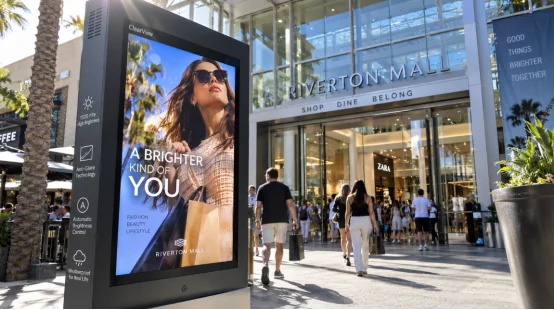
A retail window must catch attention quickly. People passing a store do not study every detail. They notice light, movement, color, and clear offers first.
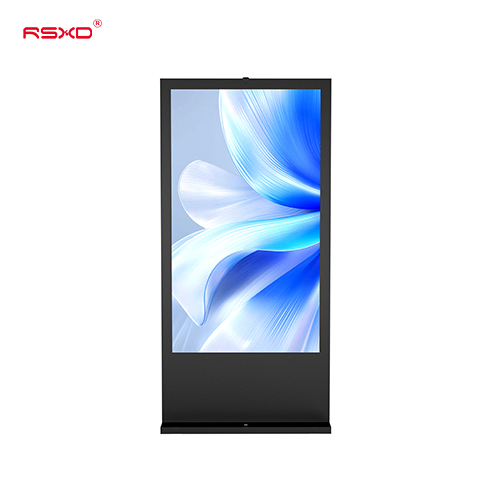
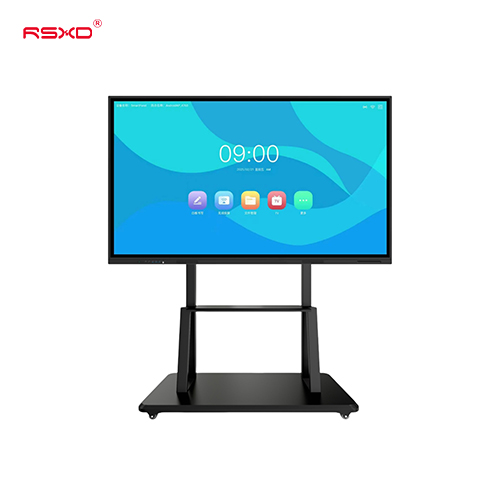
Digital signage for retail stores can play moving ads, product videos, countdowns, and rotating offers. That gives stronger visual impact at shop windows than most static posters. RSXD’s commercial advertising display products use HD LCD panels, support 1080P/4K display, wide viewing angles, video and image playback, and 24/7 stable operation, which fits long retail opening hours.
A high brightness window display also helps when glass reflection, mall lighting, or street light weakens printed graphics. A poster depends heavily on lighting. A dynamic window advertising display brings its own light source, which is a big deal in evening retail traffic.
Content speed is often the real reason retailers switch from posters to screens. Promotions change. Inventory changes. Weather changes. A cafe may sell iced drinks at noon and hot drinks after sunset.
With digital signage content management, you can use remote content update, USB content update, network content publishing, or scheduled content playback. RSXD’s advertising machines support remote information publishing, scheduled power on and off, split-screen display, intelligent dimming, and batch management of multiple devices. That is useful for multi-store content management, especially when campaigns need to go live at the same time.
Digital signage vs printed posters becomes easy to compare here. Posters are fine when content rarely changes. But if your store changes prices, menus, styles, or offers every week, manual replacement becomes slow and messy.
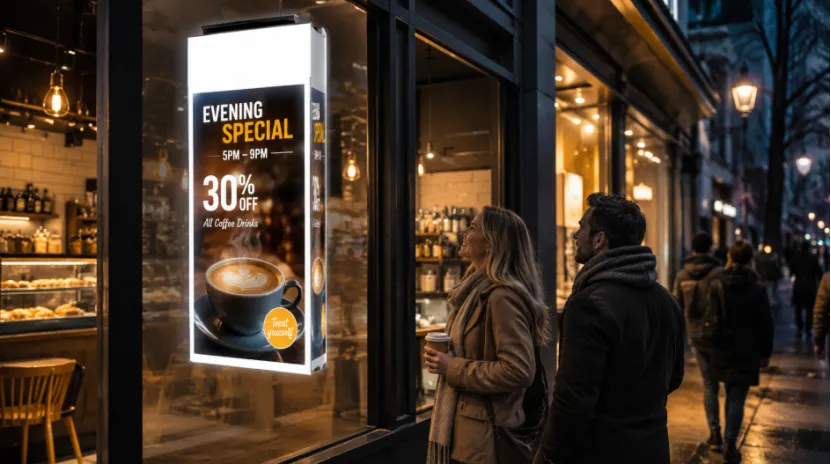
A retail window advertising display is not only decoration. Its job is to pull attention from outside and move people closer to the door.
A double-sided hanging window display vs traditional poster comparison shows one clear gap: a screen can carry more than one message. It can show “Sale” first, then a product video, then a QR code, then a new arrival. Posters usually deliver one fixed message. That is why retail digital signage vs posters often depends on campaign frequency and storefront traffic.
For busy streets, malls, and service centers, a shop window advertising screen can help attract passersby to retail stores while still giving useful information inside.
The initial cost of a poster is lower. No argument there. But long-term cost of digital signage looks different when content changes often.
A screen can reduce poster printing cost, retail poster replacement cost, and staff time. It also supports more campaigns in the same display space. When power use, digital signage maintenance cost, and service life are counted, a cost-effective retail advertising display can make sense for active retail brands.
RSXD’s knowledge base lists advertising display service life at ≥50,000 hours, with indoor brightness of 300–500 cd/㎡ and outdoor or high-brightness models at 800–1500 cd/㎡.
For a retail project, the supplier matters as much as the screen. You need stable hardware, clean installation support, flexible system choices, and packaging that survives shipping.
RSXD is a commercial digital signage manufacturer focused on commercial LCD display equipment and turnkey display solutions. Its product range covers advertising machines, touch query kiosks, LCD video walls, education and conference displays, and custom commercial display products.
For a custom double-sided window display, RSXD can support size, brightness, system, interface, installation structure, language, OEM digital window display, ODM digital window display, and packaging needs. Its production process includes sheet metal work, electronic assembly, software debugging, system pre-installation, and at least 48 hours of high-temperature aging tests.
For distributors, contractors, and chain retail buyers, RSXD is not just selling a screen. It is closer to a project supply partner, especially when bulk order digital signage display work needs stable delivery, repeatable quality, and after-sales support.
Q1: Is a Double-Sided Hanging Window Display Better Than a Traditional Poster?
A: It is better for frequent updates, motion ads, high-traffic windows, and two-way communication. A traditional poster is better for very short, low-budget campaigns.
Q2: Can Each Side Show Different Content?
A: Yes. One side can show outside promotions, while the other side shows product details, store services, or member offers.
Q3: Is a Digital Window Display More Expensive Than Printed Posters?
A: The first purchase costs more, but it can reduce repeated printing cost and manual replacement cost over time.
Q4: Which Retail Stores Benefit Most From This Display?
A: Fashion stores, cosmetics stores, cafes, restaurants, chain stores, banks, real estate offices, and service centers benefit most when storefront traffic is high.
Q5: What Should You Check Before Buying?
A: Check brightness, screen size, hanging structure, system, content update method, warranty, packaging, and whether OEM or ODM customization is needed.