 author
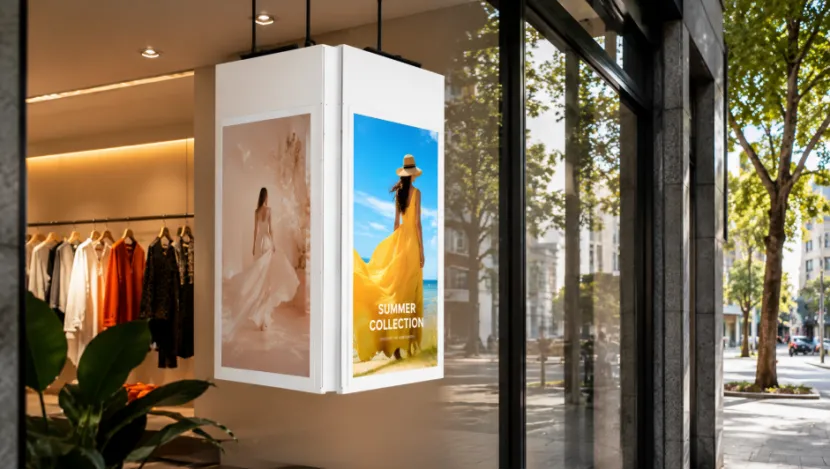
Choosing brightness for a double-sided hanging window display is not just a number game. A screen that looks bright in a meeting room may look washed out behind glass at 2 p.m. The real question is where the display will face: inside a calm retail store, toward a mall corridor, or straight through a sunlit shop window.
For buyers, the safest choice comes from matching digital signage brightness to glass reflection, viewing distance, lighting, and daily operating hours.
A double-sided window display has two jobs. One side needs to catch passing traffic. The other side talks to shoppers already inside. These two sides often face very different lighting conditions, so one brightness level may not fit both.
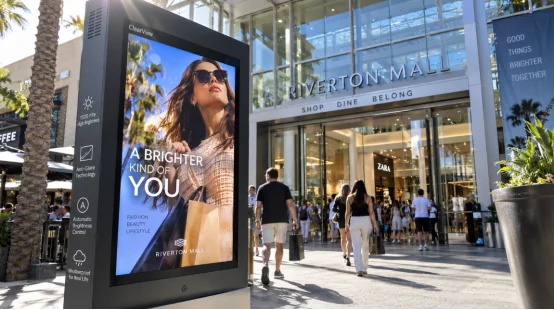
The street-facing side usually needs stronger brightness because it fights daylight, glass glare, and movement outside the store. If the screen looks dim, people do not stop. That is blunt, but true. For window-facing digital signage, many industry guides place common window-facing brightness around 1000–2500 nits, while stronger outdoor or direct-sunlight scenes may need more.
The inside-facing side can often use lower brightness. A luxury retail window display, cosmetics counter, or cafe window digital display should not feel like a floodlight. Too much brightness can hurt the store mood and raise digital signage power consumption.
Before comparing models, you need to read brightness terms correctly. Many buyers see “HD” or “1080P” and assume the screen will look clear anywhere. It may not.
Nits and cd/m² usually mean the same thing in display specifications. Both describe how much light the screen gives off. So when you read 700 cd/m² window display, it is roughly the same as 700 nits. The screen brightness nits figure matters most when the display sits near glass or strong lighting.
Resolution controls detail. Brightness controls visibility. A 1920×1080 screen can still look weak if the storefront has heavy sunlight or a shiny glass facade. For retail window digital signage, brightness, contrast, and screen position all matter.
Sometimes, yes. Sometimes, definitely not. This is where many buyers make the wrong call because they compare price before checking the installation spot.
300–500 cd/m² digital signage works well in normal indoor lighting, such as interior store walls, hotel corridors, office reception areas, or low reflection indoor display scenes.
RSXD’s knowledge base lists indoor advertising machine brightness at 300–500 cd/㎡, with outdoor models at 800–1500 cd/㎡ and high brightness customization available. It also notes 1080P/4K display options, 178° viewing angle, 24/7 operation, and ≥50,000 hours service life for advertising machines.
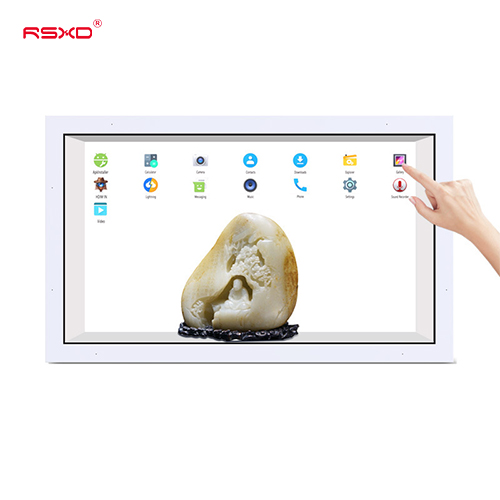
A 700 cd/m² window display is a practical middle choice for many malls, brand stores, restaurants, and indoor storefronts. The RSXD double-sided hanging window display uses 700 cd/m² brightness, 1920×1080 resolution, 178° viewing angle, Android or Windows system options, and 32, 43, and 55 inch sizes. It is made for storefront windows, retail advertising, mall display, and commercial information display.
A high brightness window display makes sense when the screen faces strong light. This includes street-facing windows, glass mall entrances, atriums, airport terminal digital signage, exhibition hall digital signage, and shops with bright ceiling spotlights.
Glass reflection digital signage is tricky. The glass reflects sky, cars, people, trees, and mall lighting. This weakens the image before the customer even sees the content. To reduce reflection on digital signage, move the screen closer to the glass, avoid direct spotlights on the screen, and use high contrast digital signage content with large text.
For many storefronts, asymmetric brightness double-sided display design is more sensible than using the same brightness on both sides. The outside-facing digital display brightness can be higher. The inside-facing digital display brightness can stay softer. This gives better window display visibility without making the store interior uncomfortable.
Not always. A very bright screen sounds impressive, but it can add cost, heat, and nighttime glare. A bright screen in a quiet cafe at night can feel harsh. People came for coffee, not an eye test.
High brightness display power consumption is higher, so digital signage operating cost rises across long daily use. Auto brightness digital signage or an ambient light sensor digital signage setup can help adjust the panel through the day. Nighttime brightness control is useful for windows that stay lit after closing.
A digital signage brightness test should be done at the real installation place. Check the screen at noon, late afternoon, and night. For a window display brightness test, stand 3 meters, 5 meters, and 10 meters away. Look at prices, QR codes, product images, and short message window advertising. If small text disappears, the brightness or content design needs changing.
For B2B projects, the supplier should support more than a product photo. RSXD is a commercial digital signage manufacturer focused on commercial LCD display equipment and turnkey display solutions.
Its product range covers advertising machines, touch kiosks, LCD video walls, education and conference displays, and customized commercial LCD advertising display products. The company’s production base supports sheet metal, assembly, testing, aging lines, and project-based customization for size, system, installation, operation, and maintenance.
For project buyers, RSXD can provide a custom double-sided window display, custom brightness window display, OEM double-sided window display, ODM double-sided window display, interface options, language settings, packaging support, and installation structure choices.
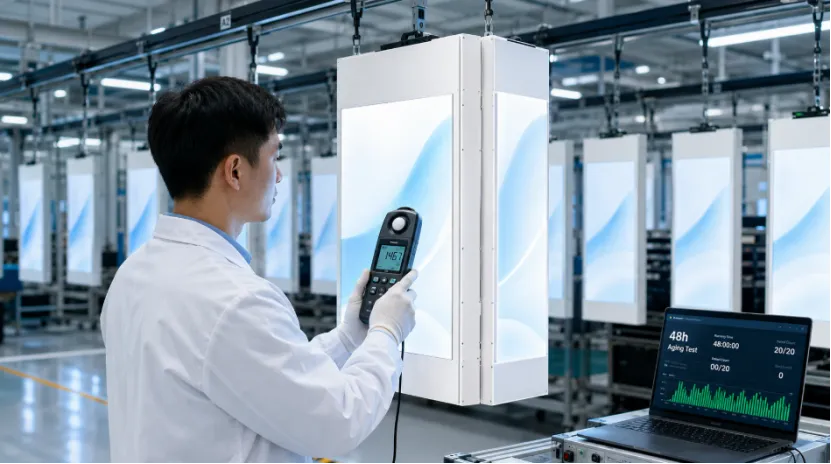
Its quality process includes system pre-installation, parameter calibration, functional testing, and ≥48 hours of high-temperature aging tests, including brightness, contrast, color consistency, power stability, interface compatibility, structure strength, and heat dissipation checks.
Q1: What Brightness Is Best for a Double-Sided Hanging Window Display?
A: For indoor retail spaces, 500–700 cd/m² may work. For storefront window digital signage with glass glare or daylight, 1000–2500 nits window display brightness is often safer.
Q2: Is 700 cd/m² Enough for a Storefront Window?
A: It can be enough for malls, indoor retail entrances, and low-reflection windows. For street-facing sunlight, choose a high brightness digital signage display.
Q3: Should Both Sides Use the Same Brightness?
A: Not always. Street-facing side brightness usually needs to be higher, while indoor-facing side brightness can be lower for better comfort.
Q4: What Else Improves Digital Signage Visibility?
A: Anti-glare digital signage, wide viewing angle display, display contrast ratio, large text digital signage content, and screen position all help.
Q5: What Should You Test Before Ordering in Bulk?
A: Test digital signage before bulk order at the real installation location. Check viewing distance for window display, glass reflection, daytime visibility, nighttime brightness control, and content readability.